English
 العربية

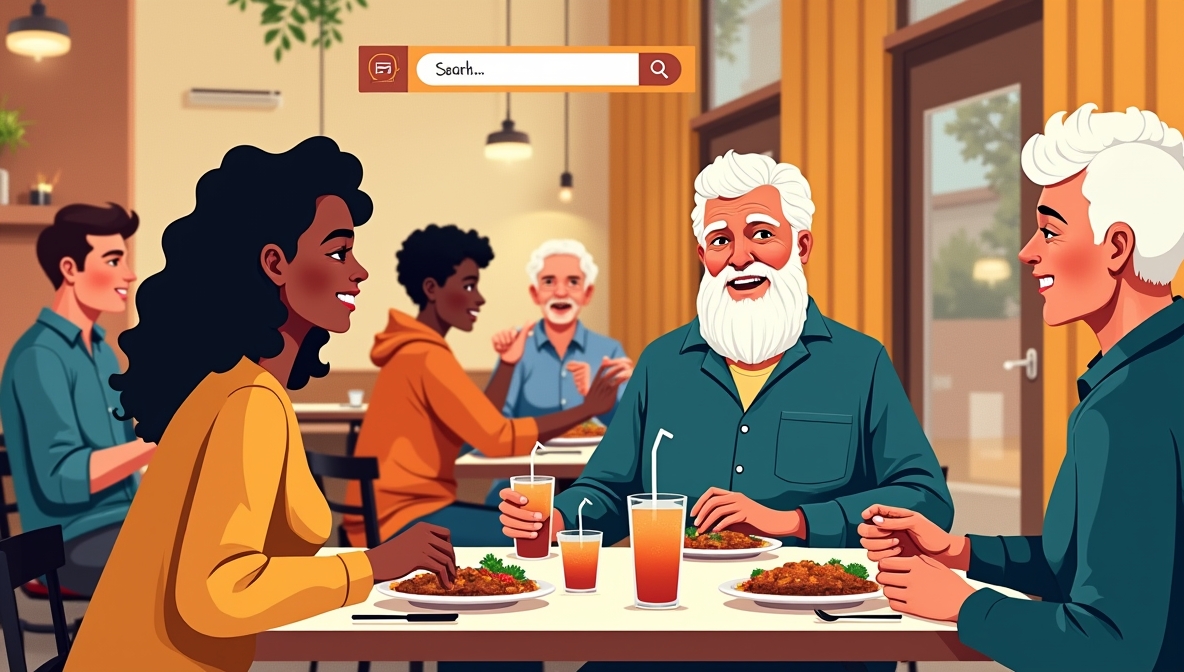
Most restaurant owners think the battle is won in the kitchen. Great food, consistent taste, and good service should naturally bring customers back. But in today’s world, that’s only half the story. The real competition often starts long before a guest walks through the door—on a search results page.
People no longer “discover” restaurants by walking around randomly. They search, compare, read reviews, check menus, look at photos, and then decide where to go. And after their first visit, many of them return only if their entire experience—online and offline—feels seamless and memorable.
That’s where search-driven strategy becomes powerful. It doesn’t just help you get discovered. It helps you convert casual browsers into first-time diners—and first-time diners into regulars.
Let’s break down how that actually works.
The New Reality: Restaurants Are Decided Before They Are Visited
A typical journey looks like this:
- “Best restaurants near me” search
- Scrolling Google Maps results
- Comparing ratings and photos
- Checking reviews for consistency
- Looking at menu pricing
- Visiting once (if convinced)
- Deciding whether to return
This means your online presence is no longer marketing—it is your first impression, your menu preview, your reputation, and your salesperson all in one.
If any step in that journey feels weak, you lose the customer before they even taste your food.
Strategy 1: Win the “Intent Moment” in Search Results
Not all searches are equal. Someone searching “Italian restaurant” is browsing. Someone searching “best pasta near me open now” is ready to eat.
The key is to align your visibility with high-intent searches.
What this means in practice:
- Optimize your content for location + dish combinations
(e.g., “wood-fired pizza in [area]” instead of just “pizza restaurant”) - Create pages or listings that match urgent needs
(“open now”, “late-night dining”, “family dinner spots”) - Ensure your Google Business Profile is complete and active
When your restaurant appears exactly when hunger is strongest, conversion rates increase dramatically.
You’re not just visible—you’re timely.
Strategy 2: Turn Your Google Business Profile into a Conversion Engine
For many restaurants, the Google Business Profile is more important than the website itself.
Why? Because it’s often the first—and sometimes only—thing people see.
A strong profile does more than show your location. It builds trust instantly.
Key elements that influence diners:
- High-quality food photography (not stock images)
- Updated menu with pricing clarity
- Accurate opening hours (especially holidays)
- Regular posts or updates
- Fast responses to reviews
But the real game-changer is consistency. A profile that feels active signals that the restaurant is alive, busy, and reliable.
Inactive profiles feel abandoned—even if the food is excellent.
Strategy 3: Reviews Are the New Word-of-Mouth (at scale)
In the past, a satisfied customer told friends. Today, they tell the internet.
But reviews are more than just ratings—they influence both ranking and conversion.
What actually matters:
- Volume of reviews (not just rating)
- Recency of reviews
- Mention of specific dishes or experiences
- Owner responses
A restaurant with 4.3 stars and 800 reviews often performs better than one with 4.8 stars and 40 reviews.
Why? Because people trust patterns, not perfection.
How to encourage better reviews:
- Ask at the right time (after a good meal, not during rush)
- Make it simple (QR codes on receipts or tables)
- Respond to every review professionally
A thoughtful reply to a negative review can sometimes win more trust than a positive review ever could.
Strategy 4: Build Search-Friendly Menu Architecture
Most restaurant menus are designed for print, not search.
But online menus are actually powerful discovery tools.
When structured properly, they help you appear for specific food searches.
Instead of:
“Chef’s Special Pasta”
Use:
“Creamy Truffle Mushroom Pasta with Parmesan”
This matters because people search in natural language:
- “truffle pasta near me”
- “best mushroom pasta in [city]”
Your menu becomes a ranking asset when it mirrors how people search.
Also important:
- Add descriptions to signature dishes
- Include ingredients where relevant
- Avoid overly generic naming
Strategy 5: Local Authority Builds Long-Term Traffic
Search engines prefer restaurants that feel “established” in a location.
This isn’t just about backlinks—it’s about local relevance signals.
Ways to build authority:
- Get listed on local food directories
- Collaborate with nearby businesses
- Participate in local events or festivals
- Get featured in food blogs or city guides
Over time, these signals reinforce that your restaurant is a trusted part of the local dining ecosystem.
And trust equals visibility.
Strategy 6: Turn First-Time Visitors into Repeat Searches
The journey doesn’t end when someone visits your restaurant. In fact, that’s where long-term growth begins.
If a diner had a good experience, they often search again later:
- “that restaurant I went to last week”
- “best dish at [restaurant name]”
- “menu of [restaurant name]”
This is why branded search matters.
How to strengthen it:
- Ensure your name is consistent everywhere online
- Encourage tagging on social media
- Keep your visual identity recognizable
- Maintain a memorable dish or signature item
When people start searching for you by name, you’ve moved from discovery to loyalty.
Strategy 7: Mobile Experience Determines Conversion
Most restaurant searches happen on mobile devices, often when people are already outside or deciding where to go.
If your mobile experience is poor, you lose immediate customers.
Critical mobile factors:
- Fast loading website
- Click-to-call functionality
- Easy navigation to menu and location
- Integration with Google Maps directions
Even a 3-second delay can reduce conversions significantly in food-related searches.
In short: convenience wins.
Strategy 8: Visual Search Appeal Drives Emotional Decisions
Food is emotional. People don’t just want information—they want desire.
That’s why images matter as much as rankings.
Effective visual strategy includes:
- High-resolution food photography
- Real ambiance shots (not staged stock photos)
- Consistent lighting and style
- Showcasing best-selling dishes first
When users scroll search results, visuals often decide who gets the click—not ratings.
A single appetizing image can outperform dozens of keywords.
Strategy 9: Content That Answers Real Dining Questions
Search engines reward helpful content. Restaurants can use this to build trust before customers even arrive.
Instead of only promoting, answer questions like:
- “What should I order for my first visit?”
- “Is this restaurant good for families?”
- “What are the signature dishes?”
- “Do you offer vegetarian options?”
This content reduces uncertainty—and uncertainty is the biggest barrier to conversion.
When people feel informed, they feel safe to book.
Strategy 10: Consistency Across Every Digital Touchpoint
One of the biggest hidden problems in restaurant marketing is inconsistency.
Different:
- Names across platforms
- Phone numbers
- Opening hours
- Menu versions
These inconsistencies confuse both users and search engines.
Consistency builds trust signals. Trust signals build rankings. Rankings build traffic.
Everything is connected.
From Browser to Regular: The Full Transformation
Turning a casual browser into a loyal diner isn’t about one tactic. It’s about guiding them through a full journey:
- Search visibility brings them in
- Strong listing builds curiosity
- Reviews create trust
- Menu clarity reduces hesitation
- Experience confirms expectations
- Follow-up searches reinforce loyalty
When all these layers work together, marketing becomes self-sustaining.
You don’t just attract customers you build repeat demand.
Final Thought
Most restaurants compete for attention. The smarter ones compete for intent. Search-driven strategy is not about tricking algorithms or stuffing keywords. It’s about aligning your restaurant with how real people decide where to eat—moment by moment, search by search. Because in today’s dining world, the journey doesn’t start at the door. It starts in search.