
Construction projects today demand proper planning, accuracy, and smooth teamwork from beginning to end. Whether contractors are building a residential house, industrial facility, office building, or commercial plaza, every structural detail must be prepared carefully before fabrication begins. Among all structural components, staircases require extra precision because small measurement mistakes can create serious installation problems later.
This is why steel staircase fabrication drawings have become highly valuable in modern construction projects. These technical drawings provide detailed instructions that help fabricators, engineers, contractors, and installation teams understand every staircase component before manufacturing starts. With accurate drawings, projects move more efficiently, material waste is reduced, and expensive onsite errors are minimized.
Today, many contractors work with professional drafting and estimating companies like Drawstick to improve project coordination and construction accuracy.
What Are Steel Staircase Fabrication Drawings?
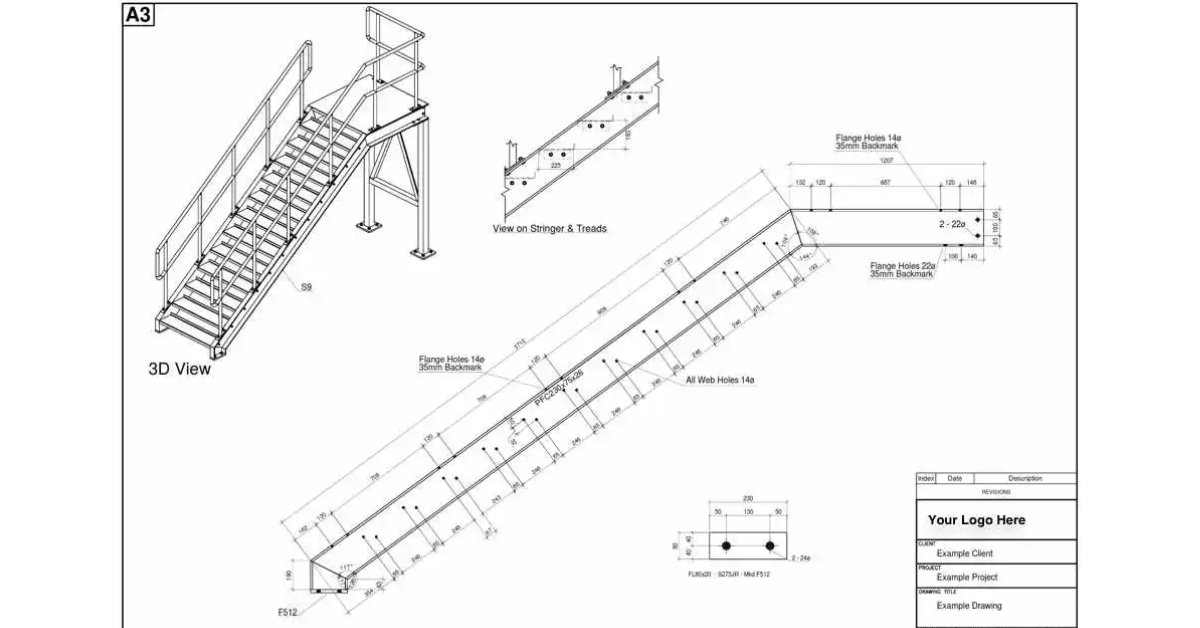
Steel staircase fabrication drawings are technical plans prepared to guide the manufacturing and installation process of steel stair systems. These drawings contain complete information needed by fabrication shops and installation crews.
Usually, fabrication drawings include:
- Stair dimensions
- Tread and riser measurements
- Landing details
- Handrail layouts
- Steel section specifications
- Bolt and connection locations
- Welding instructions
- Elevation and sectional views
- Material details
In simple words, these drawings work like a detailed guide that explains exactly how the staircase should be manufactured and assembled.
Without accurate fabrication drawings, steel fabricators may face confusion, incorrect cutting, alignment problems, and installation delays that increase both time and project costs.
Why Accurate Staircase Drawings Matter
Modern construction involves many teams working together simultaneously. Structural engineers prepare designs, fabrication shops manufacture steel components, and onsite crews handle installation work.
If communication between these teams is unclear, even a minor mistake can affect the entire project schedule.
This is where steel staircase fabrication drawings become extremely important because they improve coordination and reduce misunderstandings during fabrication and installation.
Improved Manufacturing Precision
One major benefit of professional fabrication drawings is improved precision during production. Every staircase component is measured carefully before cutting and welding begin.
This helps reduce errors during:
- Steel cutting
- Drilling
- Welding
- Assembly
- Surface finishing
For example, a contractor once fabricated a staircase using rough measurements taken onsite. Unfortunately, the floor height was slightly incorrect, causing the staircase landing to misalign during installation. Workers had to stop the project while modifications were made, increasing labor costs and delaying completion.
After switching to detailed CAD fabrication drawings, the contractor experienced far fewer production mistakes and smoother installations.
Because of this, many construction companies now combine drafting support with industrial estimating services to improve both fabrication accuracy and budgeting efficiency.
Better Coordination Between Construction Teams
Construction projects become easier to manage when every team follows the same detailed plans. Fabrication drawings improve communication between:
- Engineers
- Architects
- Fabricators
- Site supervisors
- Installation teams
Since all measurements and connection details are clearly defined, project confusion decreases significantly. Additionally, project managers can monitor fabrication progress more effectively.
This becomes especially important on large commercial and industrial projects where multiple trades must work together under strict deadlines.
Faster Installation Process
Time management plays a major role in construction success. Delays can increase labor expenses, interrupt schedules, and affect multiple trades working onsite.
Properly prepared steel staircase fabrication drawings help speed up installation because fabrication teams already understand how every component fits together before materials arrive at the site.
These drawings often include:
- Detailed connection details
- Anchor bolt locations
- Handrail specifications
- Material schedules
- Section views
- Isometric details
As a result, installation crews spend less time fixing unexpected issues during assembly.
Instead of making adjustments onsite, workers can focus directly on installation, improving overall productivity and reducing delays.
Reduced Steel Material Waste
Steel materials are costly, especially in large commercial and industrial projects. Incorrect measurements often lead to wasted materials, higher labor expenses, and budget overruns.
Detailed fabrication drawings help contractors calculate precise material quantities before production begins. This allows fabrication shops to order only the required amount of steel.
Better planning provides several advantages:
- Reduced material waste
- Lower fabrication costs
- Improved project budgeting
- Faster production workflows
- Increased profitability
Similarly, contractors working on structural concrete systems also benefit because staircase supports and anchor locations can be coordinated more accurately before installation starts.
Step-by-Step Process of Preparing Fabrication Drawings
Understanding the preparation process helps contractors recognize why fabrication drawings are so valuable during construction planning.
Step 1: Site Measurements
The first stage involves collecting accurate site dimensions. Engineers and surveyors measure:
- Floor-to-floor heights
- Wall clearances
- Landing locations
- Installation spaces
- Structural support positions
Without accurate measurements, fabrication drawings cannot provide reliable results.
Step 2: Staircase Design Planning
After measurements are collected, engineers begin planning the staircase system. This includes determining:
- Stair width
- Tread dimensions
- Riser height
- Load capacity
- Handrail style
- Support structure
At this stage, building codes and safety standards are also reviewed carefully.
Step 3: Creating CAD Drawings
Professional drafters then prepare detailed fabrication drawings using CAD software. Every manufacturing detail is added carefully to improve production accuracy.
These technical drawings allow fabrication shops to understand exactly how each staircase component should be manufactured.
During this phase, contractors often coordinate material quantities and labor calculations to improve estimating accuracy.
Step 4: Review and Approval
Before fabrication starts, engineers, contractors, and clients review the drawings thoroughly.
This approval process helps identify potential issues before manufacturing begins. Making revisions during planning is far less expensive than correcting fabrication mistakes later.
Step 5: Fabrication and Installation
Once approved, fabrication shops begin manufacturing the staircase components according to finalized drawings.
Since all details are already planned, fabrication becomes more organized and efficient. Installation crews can then assemble the staircase onsite with fewer complications and delays.
How Fabrication Drawings Support Business Growth
Many contractors think fabrication drawings are only technical documents. However, they also improve overall business performance.
Professional staircase fabrication drawings help companies:
- Improve customer satisfaction
- Reduce project delays
- Minimize labor issues
- Increase bidding accuracy
- Improve project organization
- Win larger contracts
- Increase profit margins
Companies that combine professional drafting with estimating support often complete projects more efficiently and maintain stronger client relationships.
This becomes extremely valuable for contractors handling large commercial and industrial construction projects where accuracy directly affects profitability.
Problems Contractors Face Without Fabrication Drawings
Projects completed without detailed fabrication drawings often experience serious problems, including:
- Incorrect staircase dimensions
- Welding errors
- Installation delays
- Material shortages
- Safety compliance issues
- Increased labor costs
Imagine installation crews arriving onsite only to discover that the staircase landing does not align with the concrete slab elevation. Work must stop immediately while modifications are made. These delays can affect several other trades working on the same project.
That is why professional fabrication drawings are considered an important investment rather than an optional service.
Advantages of Modern CAD Drafting Systems
Modern digital drafting systems provide much better accuracy compared to handwritten sketches or manual calculations.
CAD drafting offers several important benefits:
- Better precision
- Faster design revisions
- Easy digital file sharing
- Improved team collaboration
- 3D visualization support
- Secure cloud-based storage
Additionally, digital drafting integrates smoothly with construction estimating systems, helping contractors manage fabrication planning and project budgets more effectively.
Conclusion
Detailed steel staircase fabrication drawings are essential for improving fabrication accuracy, reducing installation problems, and increasing construction efficiency. These drawings help contractors, fabricators, engineers, and installation teams coordinate projects more effectively from beginning to end.
Moreover, companies that invest in professional drafting and estimating support often experience smoother workflows, improved productivity, and higher profitability. Whether working on residential, industrial, or commercial projects, accurate fabrication drawings help construction teams complete work with greater confidence and fewer costly mistakes.
Professional companies like Drawstick continue supporting contractors with reliable drafting and estimating services that improve fabrication planning and overall construction performance.
FAQs
1. What are steel staircase fabrication drawings?
These are detailed technical drawings used for manufacturing and installing steel staircases. They include measurements, material specifications, welding details, and connection information.
2. Why are fabrication drawings important?
They improve fabrication accuracy, reduce installation mistakes, minimize delays, and help contractors manage materials more efficiently.
3. How do fabrication drawings reduce costs?
They help reduce rework, minimize material waste, improve labor planning, and prevent expensive onsite modifications.
4. Can fabrication drawings improve project estimating?
Yes. Detailed fabrication drawings allow contractors to calculate material quantities and labor requirements more accurately, improving overall project budgeting.